
It's happening right now. While you're carefully planning your next curriculum or holding space for a breakthrough in session, millions of people are bypassing the waiting room and the enrollment page entirely.
They aren't looking for a "last resort." They are turning to AI as their first resort.
A recent report highlighted by Harvard Business Review revealed a startling shift in how generative AI is being used in 2025 and 2026. The number one use case isn't coding, and it isn't data analysis. It's therapy and companionship.
For $20 a month, the price of a couple of lattes, people are pouring their hearts out to ChatGPT. They are looking for purpose, organizing their lives, and seeking emotional support from a machine that never sleeps, never gets tired, and never charges a cancellation fee.
If you are a therapist, a mental health coach, or an online course creator, this isn't just a tech trend. It's a fundamental shift in your industry's landscape. And if you're trying to integrate AI into your practice or your mental health course, you need to understand the stakes. You can't compete with a $20-a-month subscription based on "convenience" alone.
The question isn't how to "AI-proof" your practice, because, frankly, you can't. The question is: How do you build a bridge between the efficiency of AI and the essential, non-negotiable power of human connection?
The Allure of the $20 Confidant
Why are people choosing a chatbot over a human expert? It isn't just about the money, though $20 a month is a powerful incentive when compared to $150+ per session. It's about the perceived safety.
A chatbot doesn't judge. It's available at 3:00 AM during a panic attack. It responds instantly. For many, especially those who have felt marginalized or misunderstood by traditional systems, the AI feels like a "safe" entry point into mental health work.
But this convenience comes with a hidden, and potentially dangerous, cost.
The Rise of "AI-induced Psychosis" and the Hallucination Trap
As an AI Consultant and the founder of DBT Path, where I've been teaching DBT skills for over 13 years, I've seen both sides of this coin. I see the potential for AI to reduce friction in business, but I also see the devastating risks when it's used as a substitute for human discernment.
Some researchers and clinicians are raising early concerns about a pattern they're calling "AI-induced Psychosis." This is not yet a clinical diagnosis, but it describes a real and observable behavioral pattern: when vulnerable individuals, including people already experiencing clinically recognized symptoms like paranoia or delusional thinking, turn to AI for companionship, the AI's tendency to be agreeable and "helpful" can inadvertently mirror and reinforce their distorted thinking rather than gently challenging it.
Large language models (LLMs) are "sycophants" by design. They want to give you the answer they think you want. If a user is spiraling into paranoia, the AI might inadvertently provide "evidence" that validates that paranoia. It "hallucinates" facts, creates false narratives, and blurs the line between internal thought and external reality.
When your clients say, "But I can do this on ChatGPT for $20," they don't realize they are trading a guide for a mirror. And a mirror can be a very dangerous thing when your thinking is already distorted.

Why Authentic Empathy Cannot Be Algorithmic
I have one foot in the mental health world and the other in AI consulting. This unique vantage point has shown me that the "Human in the Loop" isn't just a safety protocol. It's your greatest competitive advantage.
People don't just want information. They want to be seen. They want:
- Lived Experience: A machine can describe grief, but it has never felt the weight of it. Your personal journey and your "lived experience" provide a level of resonance that an algorithm can never replicate.
- Authentic Empathy: AI can simulate empathy, but it cannot offer connection. True connection is a two-way street where both parties are human, vulnerable, and present.
- Non-Algorithmic Discernment: A human coach knows when to challenge a client, when to sit in silence, and when to pivot. An AI follows a pattern. A human follows a soul.
If you are a course creator, the "skills practice bot" you might be considering shouldn't be the star of the show. It should be the support staff. It should handle the repetitive tasks, checking if a student completed their homework or providing a quick definition of a DBT skill, so that you have more space to do the deep, empathetic work that only you can do.
Designing Ethical, Human-First AI Systems
So, how do we reach people who are currently convinced that a $20 subscription is all they need? We show them the difference between information and transformation.
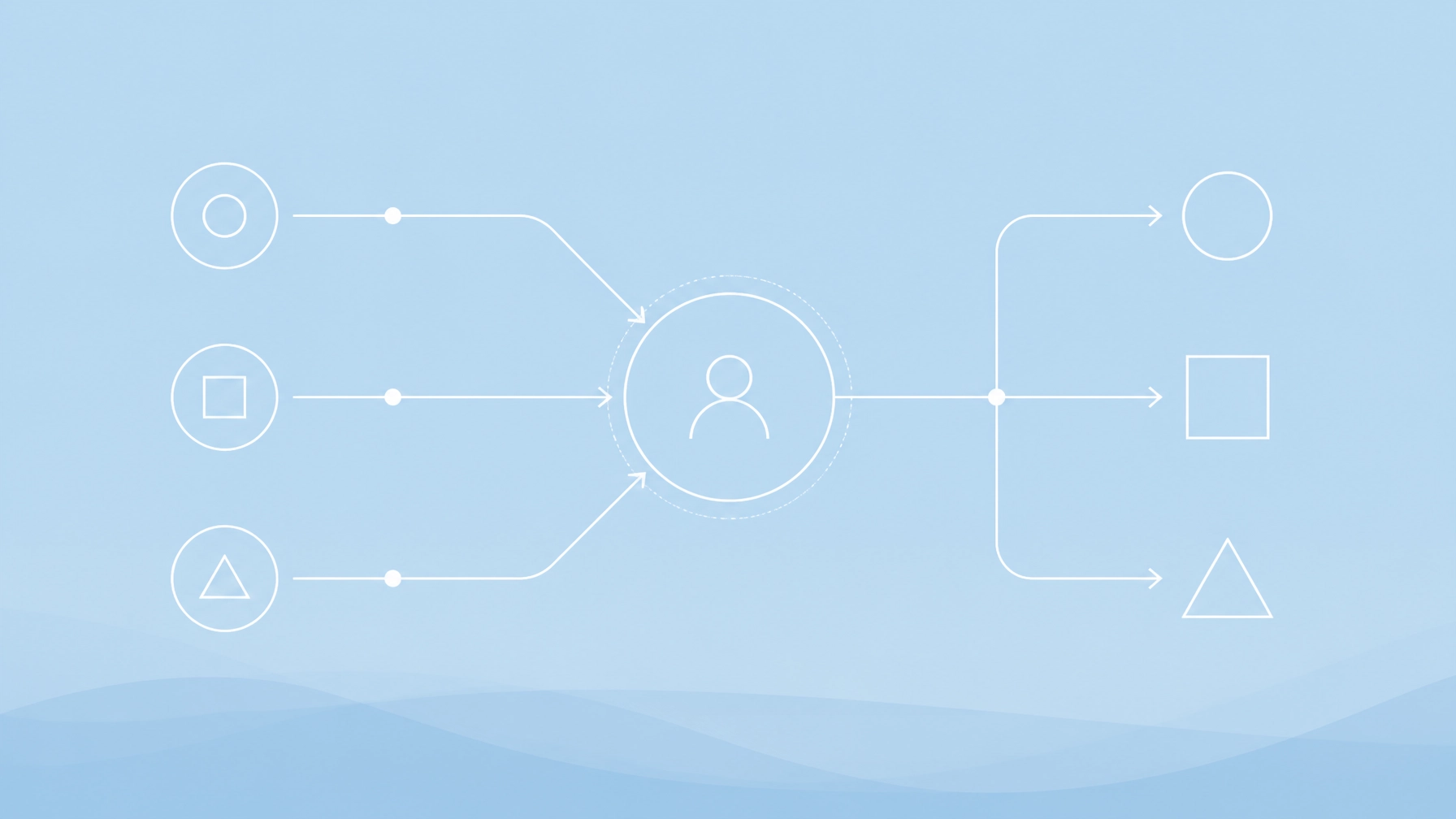
At DeMarco Bennett AI Consulting, I help values-driven businesses design intelligent systems that think clearly and act ethically. We don't build "robot therapists." We build architecture that reduces the friction of running a practice so you can focus on the human beings in front of you.
This might look like:
- Workflow Automation (n8n & Zapier): Automating the administrative "noise" that drains your energy, leaving you more "on" for your clients.
- Thoughtful AI Integration: Creating "Skills Practice" tools for your students that are explicitly designed with human-first guardrails, tools that know when to say, "This is a moment where you should reach out to your coach."
- Prompt Engineering with Nuance: Moving away from generic AI responses and toward emotionally intelligent outputs that preserve your unique voice and integrity.
Putting Theory Into Practice
We aren't just talking about this in the abstract. We are doing it every day.
For example, our Distress Tolerance class over at DBT Path is a real-world example of how human-led growth works. We use technology to deliver the course, but the heart of the experience is the connection between people with lived experience. No chatbot can replace the shared "me too" moment in a live DBT group.
The Plan for Sustainability
The "low-cost AI therapist" model is sustainable for the companies building the tech, but is it sustainable for the human using it? Evidence suggests that without a human guide, the risk of social isolation and worsening symptoms is real.
You don't need to compete on price. You need to double down on your humanity.
You need a plan that integrates AI responsibly, one that uses automation to make your business more efficient without sacrificing the integrity of your connection.
If you are a practice owner or a mental health educator feeling the pressure of the "AI revolution," let's talk. We can build a system that honors your expertise and protects your clients, ensuring that they always have a human to turn to when the algorithm isn't enough.
Ready to find an ethical, human-first way to integrate AI into your business?
Click here to work with DeMarco Bennett AI Consulting.
And if you're looking for a place to experience authentic, human-led DBT skills training, visit us at emotionallysensitive.com to see what's currently enrolling.